5 Most Common Mistakes in Presenting an Architectural Design (and How 3D Visualization Solves Them)
The presentation of an architectural design is a critical moment in every project. Whether the communication is with a client, investors, a municipal commission, or the general public, success depends on how clearly and convincingly you can explain and demonstrate your proposal.
Many projects fail already at the presentation stage—not because the design is poor, but because the information is conveyed unclearly, incompletely, or in a visually unintelligible way. In this article, we look at five of the most common mistakes in presenting an architectural design and explain how 3D visualization can effectively address them.
1. Insufficient sense of scale and space
The problem
One of the most common mistakes is presenting a design only through floor plans or 2D drawings. While these documents are technically accurate, they are often difficult to read for laypeople, clients, or investors. As a result, the true size of rooms, the proportions of façades, or the relationship between the building and its surroundings may be misunderstood.
The solution through 3D visualization
3D visualization provides clear spatial context. Clients or municipal authorities can immediately perceive the scale of the building, distances, and proportions—whether from a pedestrian’s viewpoint, a driver’s perspective, or an aerial view. Interactive models and 360° panoramas allow users to move through the space intuitively, eliminating the risk of misinterpretation.

2. Unclear representation of materials and finishes
The problem
Drawings and technical specifications often include only the names of materials, which most clients cannot easily visualize. This can lead to incorrect expectations or dissatisfaction with the final result.
The solution through 3D visualization
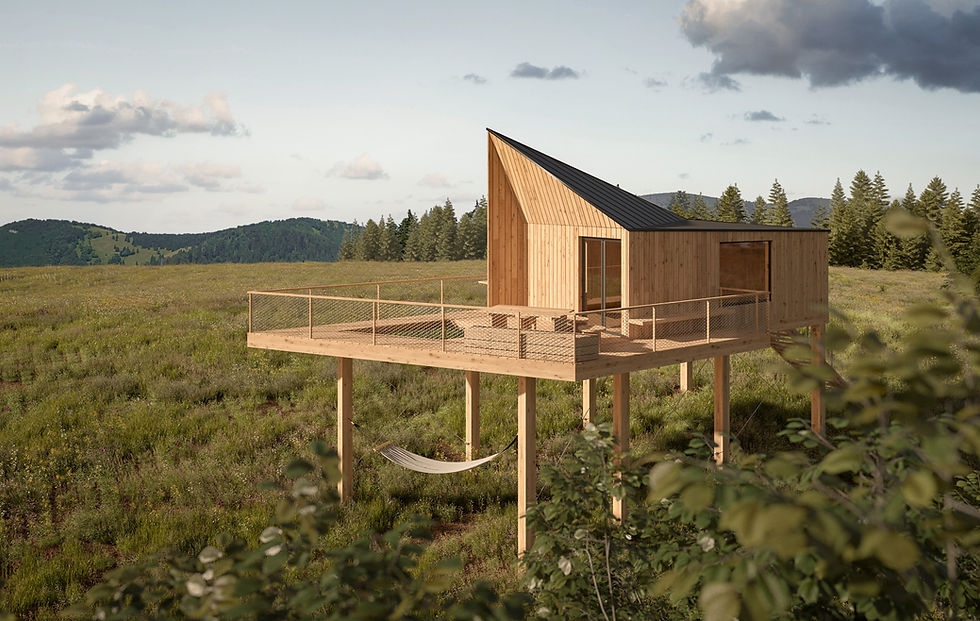
Photorealistic 3D renderings display materials with realistic quality, including textures, reflections, transparency, and light behavior. Clients can see how a façade will look under evening lighting, how wood complements paving, or how glass reflects its surroundings. This helps prevent unnecessary revisions and misunderstandings during construction.

3. Ignoring lighting and atmosphere
The Problem
Architecture is not only about volumes and colors—light and atmosphere play a major role in perception. Static floor plans or schematic visuals often fail to show how a space changes throughout the day or under artificial lighting.
The solution through 3D visualization
3D visualizations allow simulation of daylight and evening lighting, shaded areas, reflections, and atmospheric effects. The result is a realistic impression of the space, helping clients and investors understand how it will truly feel. Seasonal changes in light or different interior lighting scenarios can also be demonstrated.

4. Missing contextual information
The problem
Presentations often show a building in isolation, without reference to surrounding development, terrain, or infrastructure. This approach limits the ability of clients or the public to understand how the project integrates into its environment.
The solution through 3D visualization
A well-developed 3D model includes surroundings, vegetation, roads, and infrastructure, providing a comprehensive view of the project. Clients can see how the building fits into the urban context, how access is resolved, and how it appears from neighboring properties. This reduces the risk of resistance during permitting processes and public consultations.
5. Lack of dynamic and interactive elements
The problem
Static images or 2D drawings do not allow users to move through a space, change viewpoints, or test different layout options. This limits spatial understanding and can lead to unclear or late requests for changes.
The solution through 3D visualization
Interactive visualizations, VR tours, or animated walkthroughs provide a fully navigable environment where viewpoints, lighting, or materials can be adjusted. Clients gain a realistic experience of the space, increasing confidence in the design and reducing the number of additional revisions.

Why 3D visualization is essential
These five common issues demonstrate that verbal explanations or static drawings are often insufficient. 3D visualization is not just “a few nice images,” but a tool that improves understanding, communication, and decision-making.
Key benefits include:
Clear comprehension for clients and investors
Prevention of misunderstandings and unnecessary revisions
Realistic representation of materials, light, and atmosphere
Ability to test spatial and operational relationships
Strong persuasive power in public presentations and marketing
Conclusion
The presentation of an architectural design is a decisive moment that can determine the success of a project. The five most common mistakes—lack of scale, unclear materials, ignoring light and atmosphere, missing context, and absence of interactivity—can cause a design to be misunderstood or misinterpreted.
3D visualization addresses these problems directly. It enables clients, investors, and the public to understand the design accurately and realistically, supports faster and better-informed decision-making, and increases confidence in the final outcome.
If you want your design to appear convincing, clear, and professional, investing in high-quality 3D visualization always pays off.


Comments